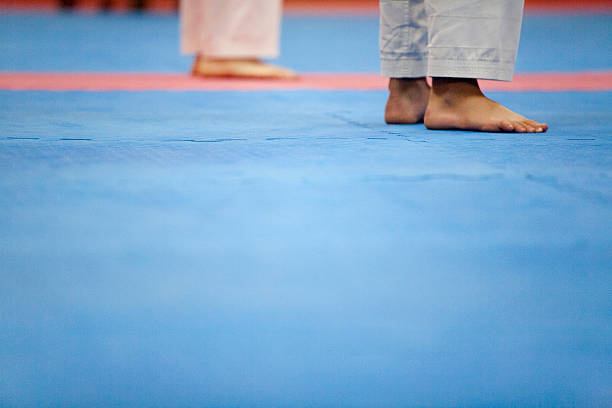
When students enter a training hall for the first time, the floor becomes one of the earliest details they evaluate, even if they do not say it out loud. Their first steps reveal how the surface interacts with their balance, their footwear, and their confidence level. Coaches pay attention to these reactions because they show whether the student feels ready to move freely or needs time to adjust. A well-prepared floor helps them settle quickly and focus on learning rather than adjusting their footing.
A surface that feels either too hard or too soft changes how they stand. When the mat sinks too deeply, it makes simple stances feel unstable. When it offers no give, the feet absorb too much pressure during basic drills. Good martial arts mats strike a middle ground so beginners understand how the surface supports their balance without forcing them to compensate.
Temperature is another early cue. A cold mat pulls attention away from movement, while an overly warm surface feels uncomfortable. Students judge comfort almost instantly through these temperature cues. A room with a stable environment helps the martial arts mats maintain a neutral feel that does not distract from practice.
Students also notice the texture of the surface, often long before they attempt any technique. A smooth texture allows sliding footwork, while a slightly grippy surface supports controlled pivots. If the surface grips too much, beginners hesitate because their feet feel locked in place. If it grips too little, they become cautious during direction changes. Coaches choose textures that match the style taught in the room, giving students predictable footing from their first steps.
Another detail that stands out involves how the mat responds when students shift their weight. Even during their first warm-up walk, beginners sense whether the floor distributes pressure evenly. Uneven pressure creates subtle wobbling that disrupts early stance work. A consistent response across the entire area reassures students that every part of the surface behaves the same way, no matter where they move.
Visual clarity also shapes early impressions. Students look at the mat layout to understand where training zones begin and end. A clean, unified surface helps them orient themselves more easily. Patterns, seams, or contrasting borders guide students toward the correct areas without requiring verbal direction. When the visual layout feels clear, beginners settle into the session faster.
Noise feedback influences comfort too. Students listen to how their steps sound. A sharp, hollow noise may give the impression of instability, while a soft, muted sound signals a more supportive surface. This acoustic detail affects how freely beginners step, especially during early drills where confidence builds slowly. A martial arts mat that produces steady, low-impact sound creates a calmer training environment for new practitioners.
Another early observation concerns how the mat handles light movement. Before formal drills begin, students often bounce lightly or shift their feet to test the surface. This instinctive behaviour helps them understand how the mat responds to subtle changes in posture. A stable surface encourages natural movement. If the mat shifts or wrinkles under light pressure, beginners immediately become more cautious.
Cleanliness enters their awareness as well. Students notice marks, dust, or worn patches quickly. A clean surface shows care and suggests that the training space follows good maintenance habits. New students feel more comfortable training on a surface that looks well kept. Consistent cleaning routines keep the room welcoming and prevent small hygiene issues from affecting early impressions.
Edge design becomes another factor. Beginners often walk near the border as they prepare for class. Raised edges or loose corners can create uncertainty about where training ends and walkway begins. When the edges sit flush and remain stable, students recognise the boundary naturally and feel more confident about stepping fully onto the surface.
Finally, new students pay attention to how the mat interacts with their early attempts at movement. Even basic warm-up motions reveal whether the floor supports smooth transitions. A supportive surface helps them adjust to the training environment without feeling overwhelmed.