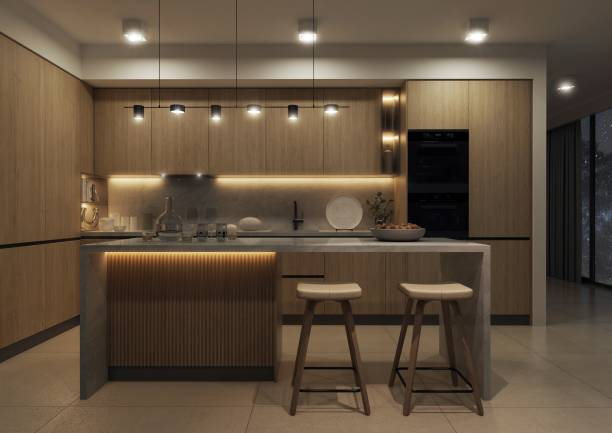
A kitchen can have fine stone, beautiful joinery, premium appliances, and a well-planned layout, yet still feel wrong once the lights come on. Poor lighting can flatten expensive materials, create shadows over work areas, and make the room feel cold instead of welcoming. In high-end projects, lighting is not a finishing touch. It is part of the design.
This is especially true in luxury kitchen designs, where the space often needs to do more than one job. It may be used for cooking, casual breakfasts, evening drinks, family conversations, or entertaining guests. One bright ceiling light cannot support all of these moments. A better plan uses layers.
The first layer is task lighting. This is the practical light used for chopping, reading labels, checking food, cleaning surfaces, and cooking safely. It should fall where hands work, not behind the person using the bench. Under-cabinet lighting, well-placed downlights, and lighting near the hob, sink, and prep zones can reduce shadows and make the kitchen easier to use.
The second layer is ambient lighting. This is the general light that helps the room feel open and comfortable. It may come from ceiling lights, recessed fittings, wall lights, or hidden strips. In large kitchens, ambient lighting needs careful balance. Too little light can make the room feel dull. Too much can make it feel like a showroom rather than a home.
Accent lighting is where mood begins. It may highlight a stone splashback, open shelves, artwork, fluted glass, a drinks area, or a textured wall. Used well, it adds depth. Used badly, it can feel busy or forced. Luxury kitchen designs often rely on restraint here. The goal is not to light every feature. The goal is to guide attention to the right details.
Pendant lights are often treated as the star of the kitchen, but they need discipline. A large island may suit two or three pendants, but size, height, spacing, and glare all matter. Pendants that hang too low can block views across the room. Fittings that are too bright can make seated guests uncomfortable. A striking light should still serve the space, not dominate it.
Colour temperature is another decision that changes the whole feeling of a kitchen. Cool light can make some surfaces look harsh. Very warm light can change how colours and stone appear. For most homes, a soft warm or neutral tone works better because it keeps the room comfortable while still showing materials clearly. The exact choice should be tested with the actual finishes, not guessed from a catalogue.
Dimming is one of the simplest ways to make a kitchen feel more flexible. Bright light may be useful while cooking, but softer light suits dinner, late-night tea, or a quiet morning. Separate lighting circuits also help. The island, cooking zone, shelves, dining area, and general ceiling lights should not all be controlled by one switch.
Natural light should be considered too. Daylight can bring warmth and life into the kitchen, but it can also create glare, heat, or fading. Window position, blinds, skylights, and reflective surfaces need to work with the electric lighting. A kitchen should feel good in the morning, afternoon, and evening.
Good lighting also protects the value of the finishes. Stone with veining, timber grain, handmade tiles, and fine cabinet details need the right light to be appreciated. Poor placement can cast shadows across the wrong areas or make surfaces look flat. This is one reason luxury kitchen designs should involve lighting decisions early, before wiring, ceiling set-outs, and cabinet details are locked in.
A high-end kitchen should not only look impressive in photos. It should feel easy to use at 7 am, calm at 9 pm, and comfortable when guests gather around the island. Lighting decides much of that feeling. With a careful plan, it can make the materials richer, the layout clearer, and the whole kitchen more inviting. Without it, even the finest kitchen can miss the mark.